Introduction
Running a packaging line with too few hands on deck isn't sustainable anymore. Many food and beverage manufacturers struggle to fill shifts, keep fill weights consistent, and meet safety regulations that only get stricter each year.
58% of food processors reported being understaffed in 2022, up from 50% the year before, according to Food Engineering's State of Food Manufacturing survey. That gap doesn't close on its own.
Packaging automation closes that gap. What started as single-purpose machines has evolved into fully integrated lines that handle everything from feeding to palletizing.
This guide covers what packaging automation is, how it works, and the equipment involved. You'll also learn the real benefits and ROI, plus how to tell if your operation is ready to automate.
Key Takeaways
- Automation handles filling, weighing, sealing, labeling, and palletizing with less manual labor
- Precision equipment improves consistency, throughput, and regulatory compliance simultaneously
- A complete line includes six connected stages, each with specialized equipment
- Working with a single-source supplier simplifies installation, service, and long-term support
What Is Food & Beverage Packaging Automation?
Food and beverage packaging automation refers to machines, robotics, sensors, and control systems that handle filling, weighing, sealing, labeling, and palletizing without constant human intervention. Instead of workers manually portioning product or sealing bags by hand, a connected system does the repetitive work while people manage quality checks, changeovers, and exceptions.
Why Adoption Is Accelerating
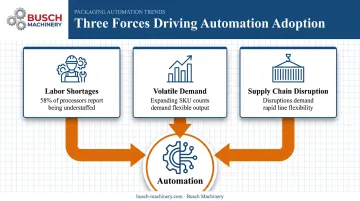
Three pressures are pushing manufacturers toward automated lines faster than ever:
- Labor shortages — with 58% of processors understaffed, filling repetitive packaging roles has become nearly impossible in some regions
- Volatile demand — SKU counts keep expanding, and lines need to switch formats without long downtime
- Supply chain disruption — container shortages and shifting supplier availability mean flexibility matters more than raw speed alone
From Single Machines to Connected Lines
Older automation meant one machine doing one job. A filler filled. A sealer sealed. Someone still had to move product between stations.
Today's lines connect those steps into a continuous flow. A multihead weigher feeds directly into a bagger, which feeds into a checkweigher, then into a case packer—all talking to the same control system.
Industry 4.0 technology is a big part of that shift. Machine vision catches defects in real time, while IoT sensors track performance data across every station.
Predictive maintenance flags a failing part before it stops the line. 71% of packaging and processing companies now use some form of predictive maintenance, up from 45% just a year earlier, per PMMI-based research reported by Packaging World.
Automation spans both primary packaging (filling and sealing, where equipment touches the product directly) and secondary or end-of-line packaging (cartoning and palletizing, where finished packs get grouped for shipping). It's also scalable. A small snack brand running one bagger and a high-output beverage plant running six filling lines can both automate, just at different scales.
How Food & Beverage Packaging Automation Works: The Step-by-Step Process
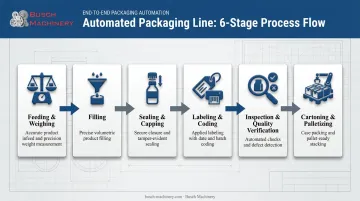
A typical automated line moves product through six connected stages. Each stage has its own specialized equipment, but the real value comes from how smoothly they hand off to each other. Busch Machinery supplies equipment for each of these stages, from multihead weighers to robotic palletizers.
Product Feeding & Weighing
Conveyors and feeders direct product toward weighing systems before anything gets packaged. Multihead weighers distribute product across multiple weighing heads, then a controller calculates which combination of heads hits the target weight most accurately. Net weight scales handle simpler, single-stream weighing for less variable products.
Filling
Fillers vary by product type:
- Gravity fillers for free-flowing liquids and granules
- Auger fillers for powders and fine dry goods
- Piston fillers for thicker liquids, pastes, and sauces
Vertical form-fill-seal (VFFS) machines form rollstock into bags, fill them from above, then seal and cut in one continuous motion, which is common for snacks and powders. Premade pouch fillers work well when brands want a specific bag shape already formed.
Sealing & Capping
Heat sealers, cappers, and vacuum sealers lock in freshness right after filling. This step directly protects shelf life and product safety, so seal quality matters as much as fill accuracy. A weak seal undoes all the precision from the weighing stage.
Labeling & Coding
Automated printers and labelers apply branding, lot codes, and expiration dates as product moves down the line. This isn't just cosmetic. Lot coding supports traceability requirements under FDA rules, and accurate date coding keeps recalls manageable if something does go wrong downstream.
Inspection & Quality Verification
Three systems work together to catch problems before they reach a customer:
- Checkweighers catch packages outside the acceptable weight range and pull them from the line
- Metal detectors scan for contamination
- Vision systems verify seal integrity and confirm correct label placement
Together, these catch most of the problems a manual line would miss until a customer complained.
End-of-Line: Cartoning & Palletizing
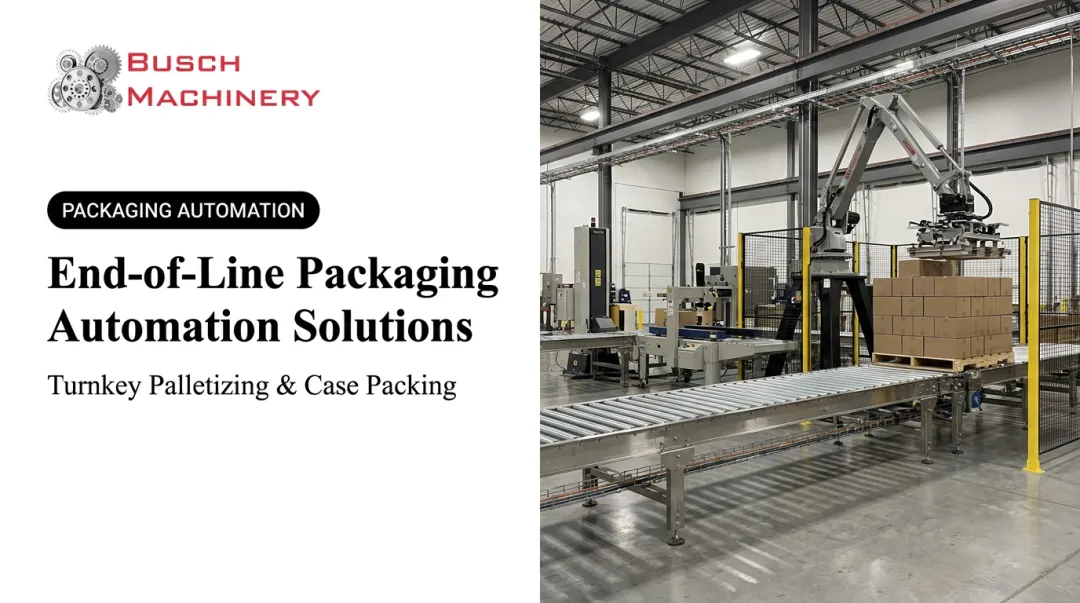
Secondary packaging groups individual units into cases or cartons for shipping. Robotic palletizers then stack those cases onto pallets in patterns optimized for stability and truck space. At this point, the line's output shifts from packaged product to shipment-ready freight.
Types of Packaging Equipment Used in Food & Beverage Automation
Every stage above requires specific equipment, and the right combination depends on your product format and volume.
Common equipment categories include:
- VFFS machines for snacks, powders, and bulk dry goods that need a formed bag on the fly
- Multihead weighers and checkweighers for precise fill weights, which cuts down on product giveaway and wasted material
- Metal detectors and inspection systems that catch contaminants before they reach a consumer
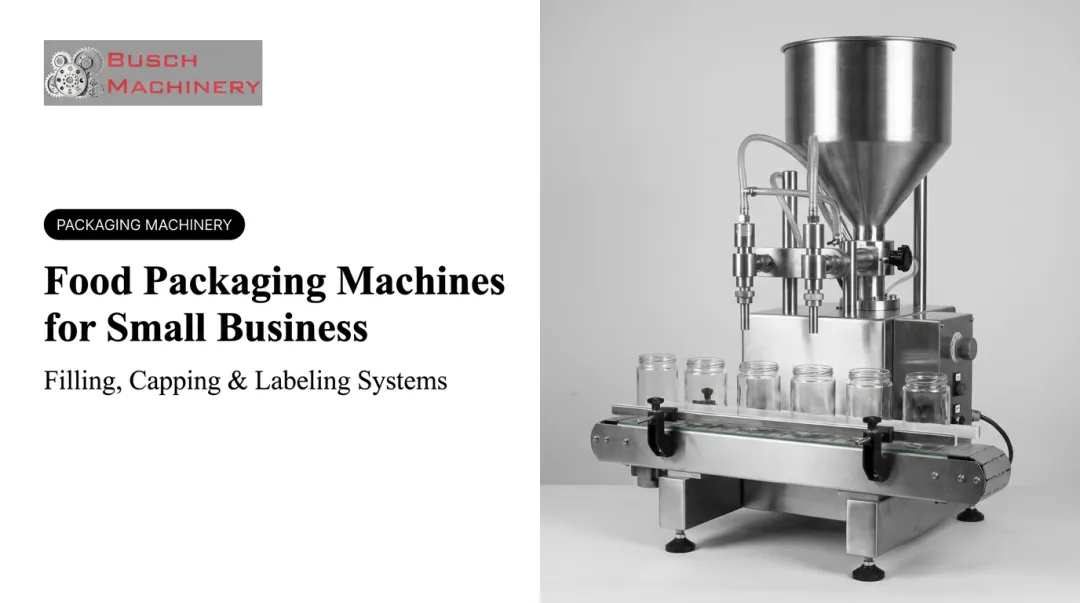
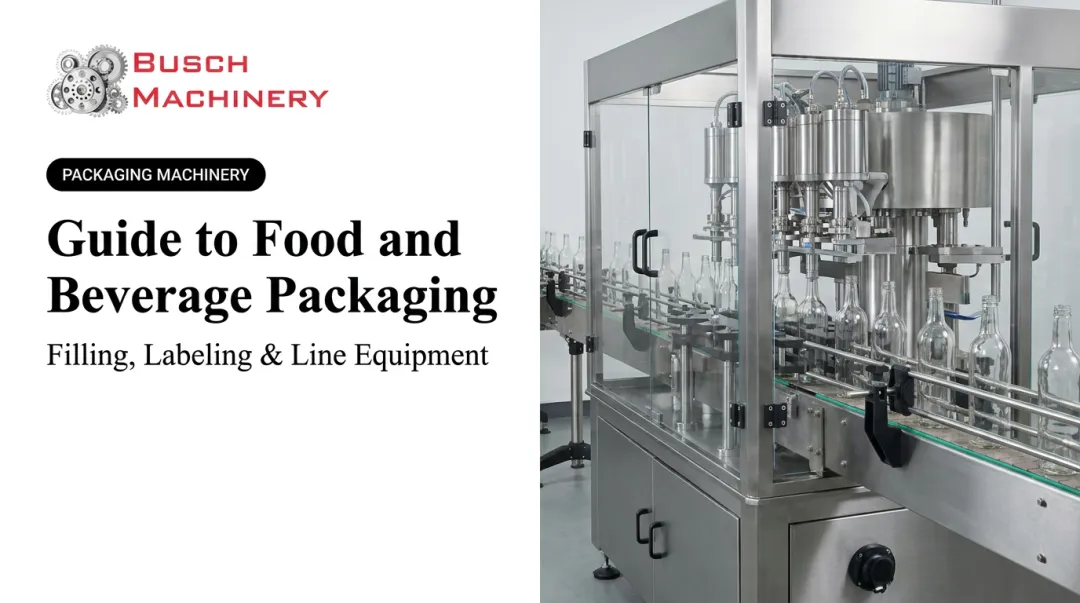
- Filling, capping, and labeling systems built specifically for liquids, bottles, and jars
- End-of-line automation including case packers, cartoners, and palletizers that finish the job
Busch Machinery supplies this full range under its own BM-series line. Examples include multihead weighers like the BM-A14 and BM-24HD, checkweigher and metal detector combination units such as the BM-GC215, and food-grade case sealers like the stainless steel BM-702SS.
As a single-source supplier since 1983, Busch works with food and beverage manufacturers to spec out fillers, labelers, weighing systems, and end-of-line equipment from one point of contact instead of juggling five different vendors.
Key Benefits & ROI of Packaging Automation
The case for automation usually comes down to three things: speed, waste reduction, and how fast the investment pays for itself.
Throughput Gains
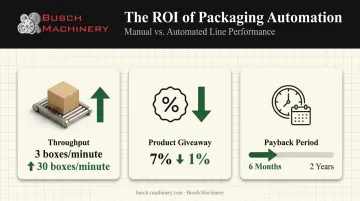
Manual case erection runs about 3 boxes per minute. A basic automatic erector handles 10 per minute, and high-end models reach 30 per minute, according to Lantech's packaging productivity data. That's a tenfold jump on the high end, without adding headcount.
Busch Machinery supplies automatic case erectors across this speed range, from entry-level to high-output models.
Reduced Product Giveaway
Precision weighing systems stop you from overfilling every package "just to be safe." One fresh fruit packaging line using Ishida multihead weighers cut giveaway from 7% down to 1%, an 86% reduction, according to a documented Ishida case study.
That same line ran at 30 packs per minute, 20% above target, while cutting labor needs in half.
Payback Timelines
That fresh fruit line paid for itself in 18 months. Industry guidance generally puts packaging automation payback somewhere between 6 months and 2 years, depending on system complexity and how much manual labor it replaces. High-volume operations with heavy labor costs tend to land on the faster end.
The math adds up fast: reduced giveaway and faster output translate directly into lower labor costs per case shipped. Those savings multiply on a line running multiple shifts.
Is Your Operation Ready for Packaging Automation?
Not every facility needs to automate everything at once. Ask yourself a few honest questions first.
Signs your operation may be ready:
- Production volume is scaling faster than your current labor pool can support
- Staffing packaging roles is inconsistent or unreliable shift to shift
- Fill weights vary enough that giveaway is eating into margin
- Food safety compliance is becoming harder to document and verify manually
If two or more of these sound familiar, it's worth running the numbers on automation.
Plan Before You Buy
Before purchasing equipment, map out:
- Floor space: where equipment will sit and how product will flow between stations
- Product format: bottles, pouches, bags, or cartons all require different machine configurations
- Integration needs: how new equipment will connect to your existing line
Skipping this step is how facilities end up with equipment that doesn't fit or doesn't talk to the rest of the line. Professional installation and proper staff training matter just as much as the machine specs.
Partnering with a single-source supplier like Busch Machinery reduces that risk. Instead of coordinating separate vendors for fillers, weighers, and end-of-line equipment, you get engineering consultation, installation guidance, and ongoing technical support from one team that already knows how the pieces fit together.
Frequently Asked Questions
What's the difference between primary and secondary packaging automation?
Primary packaging automation handles processes that touch the food directly, like filling and sealing. Secondary automation groups already-packaged items for shipping, such as cartoning and palletizing.
Can small and mid-size food and beverage producers afford packaging automation?
Modular, scalable systems let smaller producers start with a single machine, such as a checkweigher or bagger, and expand as production grows rather than committing to a full line upfront.
How does packaging automation support food safety and regulatory compliance?
Automation reduces human contact with food, adds built-in inspection through metal detectors and vision systems, and applies lot codes that support traceability. These features help facilities meet FDA and USDA monitoring and recordkeeping requirements.
How do multihead weighers and checkweighers reduce product giveaway?
Multihead weighers calculate the most accurate combination of product to hit target weight, minimizing overfill. Checkweighers then verify each package meets declared weight, catching outliers before they ship.
What is the typical ROI timeline for a food packaging automation investment?
Most systems pay for themselves within 6 months to 2 years, driven by labor savings, reduced waste, and higher throughput. Facilities automating high-labor tasks, like manual filling or case packing, typically see the fastest returns.
Is packaging automation customizable for different container types like bottles, pouches, and bags?
Yes. Equipment can be configured or combined to handle multiple formats, including bottles, pouches, bags, and cartons, depending on what your production line requires.