The stakes keep growing along with the industry itself. Grand View Research values the global pharmaceutical packaging market at $166.4 billion in 2025, with growth continuing through the rest of the decade.
That growth brings pressure. Manufacturers must run faster, hit exact dosing tolerances, and stay compliant with GMP, FDA 21 CFR, and serialization rules, all without triggering downtime, recalls, or fines.
This article breaks down what a pharmaceutical packaging line actually is, how it works stage by stage, the core equipment involved, the main line types, why automation has become the default choice, and how to pick the right packaging partner for your production goals.
Key Takeaways
- A packaging line combines fillers, cappers, labelers, inspection units, and end-of-line machines into one compliant system.
- Line design varies by product: solid-dose, liquid/injectable, blister, and sachet/VFFS formats need different equipment.
- Automation raises dosing accuracy, throughput, and traceability while cutting labor costs and product giveaway.
- The right line depends on product characteristics, required speed, regulatory scope, and room to scale.
What Is a Pharmaceutical Packaging Line?
A pharmaceutical packaging line is a coordinated system of connected equipment, think conveyors, fillers, sealers, labelers, inspection stations, and end-of-line machines, that turns bulk drug product into a finished, labeled, shippable package. Nothing about it is standalone. Every machine feeds the next.
Primary vs. Secondary Packaging
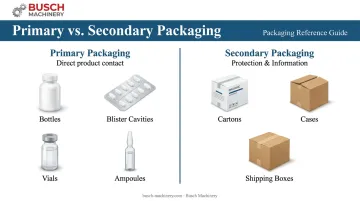
Regulators split packaging into two categories, and the distinction matters for line design:
- Primary packaging touches the product directly: bottles, blister cavities, vials, ampoules. EU law defines it as the "immediate packaging" in contact with the medicine.
- Secondary packaging protects and informs: cartons, cases, and shipping boxes that hold the primary package plus labeling and dosage instructions.
That distinction shapes everything downstream, from material selection to which validation tests a machine must pass before changeover.
Why Pharma Lines Are Different
Food and beverage lines chase speed. Pharma lines chase speed and zero tolerance for error.
Under 21 CFR Part 211 Subpart G, manufacturers need written procedures preventing label mix-ups, line clearance checks before each run, and full lot traceability. Add tamper-evidence requirements under 21 CFR 211.132, and serialization mandates like DSCSA and EU FMD, and you get a line built around documentation as much as mechanics.
Lines can be manual, semi-automatic, or fully automatic. Budget and volume usually decide which. But regardless of automation level, the line's real job stays the same: protect the product from moisture, light, and contamination so the correct dose reaches the patient.
How a Pharmaceutical Packaging Line Works: Key Stages & Equipment
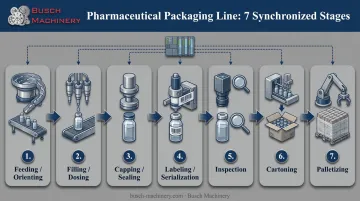
Every pharmaceutical packaging line follows a similar backbone: feed, fill, seal, inspect, label, pack, and palletize. A programmable logic controller (PLC) synchronizes all of it, keeping equipment running at matched speeds without jams or gaps in compliance data.
Here's how each stage functions.
Feeding & Product Orienting
Before anything gets filled, containers need to arrive right-side up and in single file. Unscramblers sort and orient bottles or vials onto the conveyor automatically, replacing manual sorting that slows lines down and creates bottlenecks during high-volume runs.
Filling & Dosing
This is where dosing accuracy either holds or falls apart. Filling machines (volumetric, auger, or piston) dispense precise amounts of liquid, powder, or solid dose product into containers.
- Auger fillers handle fine powders and APIs, using servo-driven screws for repeatable metering.
- Piston and volumetric fillers dose liquids and pastes by exact volume.
- Multihead weighers combine multiple small weighments for accurate portioning of granules and tablets at high speed.
Busch Machinery supplies filling equipment across liquid, powder, and multihead weighing formats built for this exact stage, including auger fillers with stainless steel contact parts designed for GMP compliance.
Capping & Sealing
Once filled, containers need a closure that holds. ROPP, screw, and induction sealing machines secure caps, prevent leaks, and support two compliance-critical features: child-resistant closures and tamper-evident seals. Both are non-negotiable for most OTC and prescription products sold in the US.
Labeling, Coding & Serialization
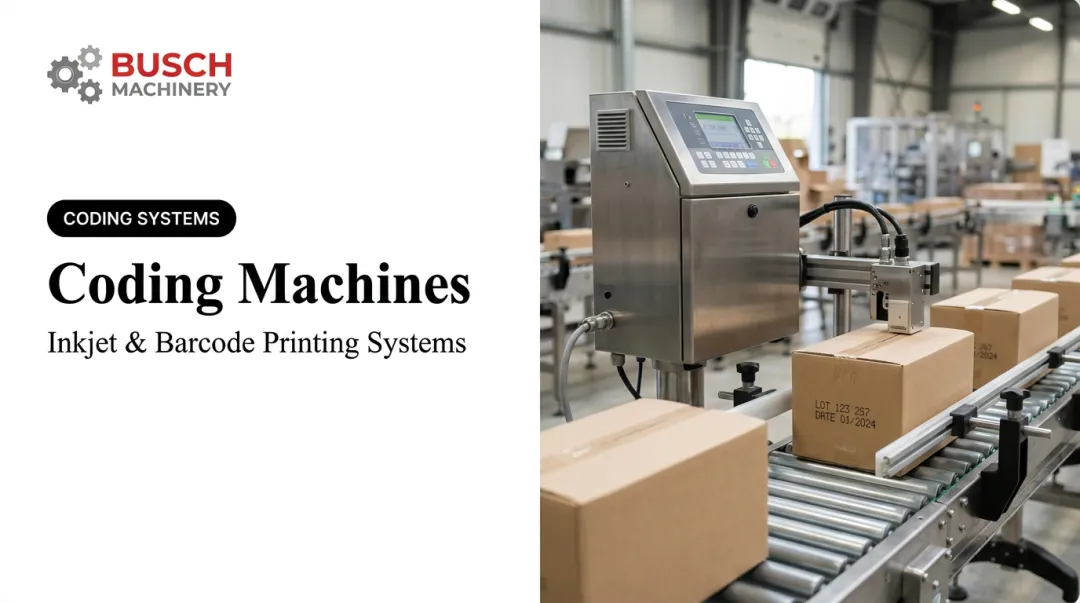
Labels do more than brand a product. They carry lot numbers, expiry dates, and serialized codes required for track-and-trace compliance.
In the US, DSCSA enhanced drug-distribution security requirements rolled out in phases:
- Manufacturers and repackagers faced a May 27, 2025 deadline.
- Wholesale distributors followed on August 27, 2025.
- Larger dispensers had until November 27, 2025.
- Small pharmacies get a final extension to November 2026.
In the EU, most prescription medicines have carried a 2D barcode unique identifier and anti-tampering device since February 2019. This system connects to a verification network spanning 30 countries and over 120,000 dispensing end users.
Inspection & Quality Control
Checkweighers and metal detectors catch what the human eye can't: underfilled bottles, overfilled vials, or a stray metal fragment. This stage sits right before cartoning for a reason. Catching a problem here stops it from ever reaching a patient, and it's far cheaper than a recall.
End-of-Line: Cartoning, Case Packing & Palletizing
The final stretch groups, boxes, and stacks finished product for shipping. Cartoners load individual units into cartons, case packers consolidate cartons into shippers, and palletizers stack and wrap pallets for warehouse handoff. This is also where automation adds the most labor savings, since manual case packing and palletizing are slow and physically repetitive.
Types of Pharmaceutical Packaging Lines
Not every drug product runs on the same line. Format dictates equipment.
Solid-dose lines handle tablets and capsules, counting and filling them into bottles or blister cards. MarketsandMarkets reports that blister packs led the oral-dose packaging market in 2025, driven largely by their tamper evidence and patient-adherence benefits.
Liquid packaging lines fill syrups, suspensions, and injectables into bottles or vials. Sterile injectables require aseptic or cleanroom environments. Under FDA's aseptic processing guidelines, filling must occur in an ISO 5 (Class 100) environment, and any fusion-closed container needs 100% integrity testing before release.
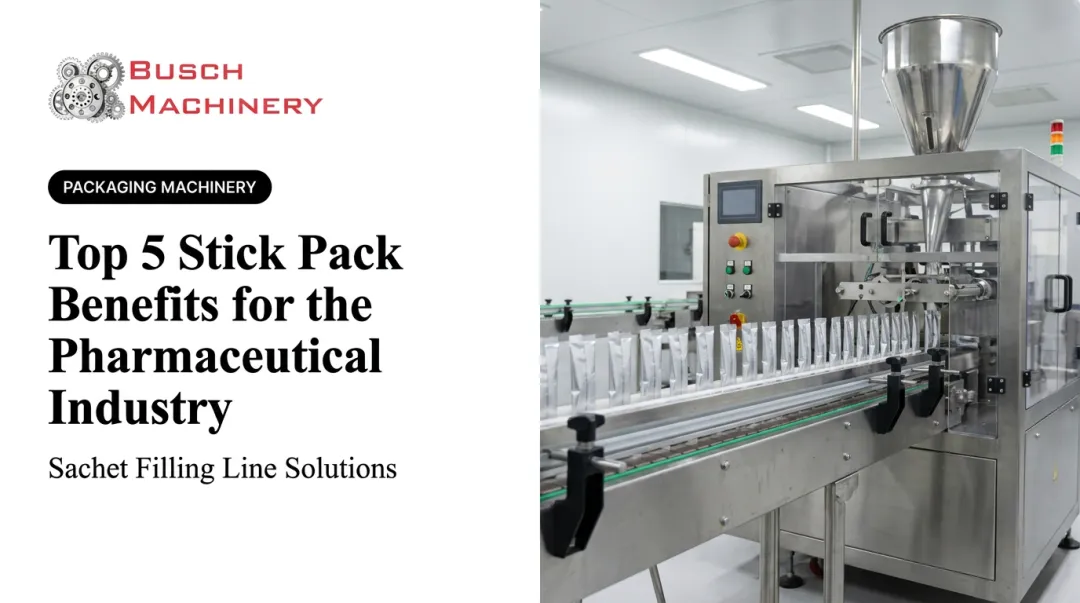
Flexible/VFFS and sachet lines use vertical form-fill-seal machines to produce single-dose sachets or stick packs for powders, granules, or liquids. This format has gained traction fast, showing up prominently across nutraceutical and pharma packaging events in 2025.
| Line Type | Primary Format | Typical Use Case |
|---|---|---|
| Solid-dose | Bottles, blister cards | Tablets, capsules |
| Liquid/sterile | Vials, ampoules, bottles | Injectables, syrups |
| VFFS/sachet | Single-dose pouches | Powders, granules, liquids |
Busch Machinery supplies equipment across each category, from tablet counters and liquid fillers to VFFS and sachet systems, matching whichever format your product line requires.
Manual vs. Automated: Why Automation Wins for Pharma
Manual packaging still exists in small-batch or startup operations. It's cheaper upfront and flexible for short runs. But it doesn't scale, and it struggles to hold consistent dosing accuracy shift after shift.
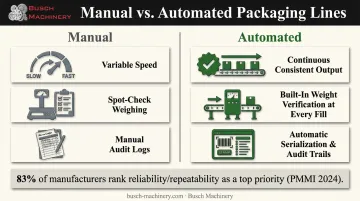
Automated lines change the equation. Busch Machinery's automated fillers and weighing systems, for instance, deliver:
- Continuous, consistent output instead of variable manual speed
- Built-in weight verification at every fill, not spot-checked
- Serialization and audit trails generated automatically as product moves down the line
The FDA's own guidance backs this up. Its draft guidance on injectable inspection states that automated inspection may improve visible-particle detectability. Machine variability is generally easier to control than the variability introduced by people performing repetitive manual checks.
The ROI case is straightforward: automated systems cut costs from multiple directions.
- Reduced product giveaway, since precise dosing eliminates the need to overfill above label claim
- Lower labor costs, since fewer operators are needed for feeding, inspecting, and packing
- Faster payback than most manufacturers expect, once material and labor savings compound
Compliance is the other half of the equation. PMMI's 2024 research found manufacturers rank reliability and repeatability among their top machine-evaluation priorities, at 83%, ahead of nearly every other factor. Automated systems deliver that consistency in a way manual labor structurally can't.
Choosing the Right Packaging Line Partner
Picking a packaging line isn't a spec-sheet exercise. It's a decision that affects throughput, compliance risk, and capital budget for years.
Key selection factors:
- Product type and format – solid-dose, liquid, sterile injectable, or sachet all require different filling and sealing technology
- Required speed – current production volume plus reasonable growth headroom
- Plant footprint – available floor space and utility access
- Budget – equipment cost, installation, and ongoing maintenance
- Regulatory scope – GMP, serialization, and track-and-trace requirements specific to your markets
The bigger question is often who builds the line, not just what it includes. Piecing together fillers from one vendor, labelers from another, and end-of-line equipment from a third creates integration headaches: mismatched controls, conflicting speeds, and finger-pointing when something breaks.
A single-source supplier avoids that. Busch Machinery has worked as a single-source packaging machinery supplier for over 40 years, serving pharmaceutical, chemical, cosmetic, and food and beverage manufacturers.
That means one point of contact for filling, labeling, weighing, and end-of-line equipment, plus engineering consultation and technical support. You get a line matched to your production goals and budget, rather than machines assembled one at a time and left hoping they talk to each other.
Frequently Asked Questions
What is a pharmaceutical packaging line?
It's an integrated system of machines that fills, seals, labels, inspects, and packs pharmaceutical products for safe, compliant distribution. Every stage runs in sync, controlled by a shared automation system.
What are the types of pharmaceutical packaging?
Primary packaging includes bottles, blisters, vials, and ampoules that touch the product directly. Secondary packaging covers cartons and cases used for protection, information, and shipping.
What is the difference between primary and secondary packaging?
Primary packaging makes direct contact with the drug product. Secondary packaging wraps around the primary package to protect it, carry labeling information, and prepare it for storage and shipping.
What machines make up a typical pharmaceutical packaging line?
A standard line includes unscramblers, filling machines, cappers, labelers, check weighers or inspection systems, cartoners, and case packers or palletizers. The exact mix depends on product format.
How do I choose the right packaging line for my pharmaceutical product?
Base the decision on product type, required speed and volume, regulatory compliance needs, budget, and how much scalability you'll need down the line. Consulting an experienced packaging machinery supplier like Busch Machinery early avoids costly rework later.
How much does a pharmaceutical packaging line cost?
Cost depends on automation level, capacity, and how many machines get integrated into the line. Because configurations vary so widely, it's best to request a custom quote based on your specific production needs.